
News Release
Maryland Competitiveness Institute, Accelerate Maryland Launch at Chamber’s Policy Forum
Nov 18, 2026
New initiatives pair year-round economic research with statewide public engagement as inaugural report finds Maryland’s 2025 economy would have been roughly $53 billion larger had it matched national growth over past decade.
Annapolis, Md. — The Maryland Chamber Foundation today launched the Maryland Competitiveness Institute, a new home for ongoing, nonpartisan economic research and education, while the Maryland Chamber of Commerce unveiled Accelerate Maryland, a multiyear statewide initiative to engage more Marylanders in shaping the state's economic future.
Both were introduced at the Maryland Chamber's 2026 Policy Forum, marking a significant expansion of the organizations' efforts to address Maryland's long-term economic competitiveness.
The Institute will provide ongoing research and accessible information about the economic challenges and opportunities facing Maryland. Accelerate Maryland will connect those issues to the experiences of businesses, workers, families and communities through storytelling, statewide partnerships and opportunities for public engagement and advocacy.
The launch also included the release of the Institute's inaugural report, The Cost of Slow Growth, which examines a decade of economic performance and how slower growth relates to jobs, household and business costs, population trends and Maryland's fiscal future.
The Cost of Slow Growth: What the research found
The Institute's inaugural report finds that Maryland's inflation-adjusted economy grew just 11.6% from 2016 through 2025, less than half the 25.1% growth recorded nationally and in neighboring Virginia.
Had Maryland matched the nation's growth rate over that period, its annual economic output in 2025 would have been approximately $53 billion larger. That is an illustrative comparison of the size of the economy, not lost state tax revenue or a forecast.
The gap was already emerging before the pandemic. From 2016 through 2019, Maryland's economy grew just 2.7%, compared with 8.2% nationally. Maryland's longer-term growth challenges also predate the federal workforce cuts of 2025.
The report examines how economic growth, the cost of living, the cost of doing business and Maryland's fiscal outlook relate to one another. Among its additional findings:
- Maryland is among the most expensive states for both households and businesses. Maryland had the nation's seventh-highest cost of living in 2024, according to the Bureau of Economic Analysis, and ranked as the seventh-most expensive state for doing business in CNBC's 2026 assessment. Many of the same cost pressures — including housing, energy and insurance — affect households and employers, influencing what families can afford and what businesses have to hire and invest.
- High household incomes do not necessarily translate into affordability. Despite having the nation's third-highest median household income, approximately 934,000 Maryland households — 39% of the statewide total — had incomes below what was needed to cover basic living expenses in 2024, according to United For ALICE. That includes households earning above the federal poverty line.
- A decade of slower job growth has added up. Maryland trailed national job growth in nine of the ten years from 2016 through 2025. Had Maryland matched the nation's employment growth over that period, the state would have had approximately 163,000 more jobs in 2025, based on an illustrative comparison using federal payroll employment data. That opportunity loss is nearly equal to the total number of civilian federal jobs located in Maryland in 2024, coming in at 161,700 jobs.
- Maryland is adding new workplaces more slowly than the nation. From 2018 through 2023, the number of private-sector workplaces in Maryland grew just 2.4%, compared with 5.5% nationally. Maryland's rate of new workplace openings was below the national rate in each of those years. The report finds that relatively low rates of new business openings, rather than unusually high closure rates, are a central challenge. Census projections also ranked Maryland 45th among states and Washington, D.C., for the share of 2023 business applications expected to become employee businesses within one year.
- More Marylanders continue to leave for other states than arrive. From 2022 through 2025, approximately 108,000 more residents moved from Maryland to other states than moved here from elsewhere in the country. Although the annual net loss has narrowed substantially, Maryland continued to lose more residents to other states than it gained in each of those four years.
- Maryland's projected budget challenges are growing. State analysts project ongoing General Fund spending to increase 5.6% annually through FY2031, compared with 3.5% annual growth in ongoing revenue — meaning spending is projected to grow about 60% faster than revenue. The state's projected shortfall widens from approximately $600 million in FY2027 to $2.57 billion in FY2028.
Together, the findings illustrate why household affordability, business competitiveness and economic growth cannot be considered in isolation. The report does not attribute Maryland's slower growth to any single cost or policy. Instead, it provides a broader picture of the pressures facing Marylanders and employers, and why the state's economic trajectory matters for jobs, opportunities and the public priorities Marylanders depend on.
Maryland Competitiveness Institute: A lasting commitment to research
The Maryland Competitiveness Institute builds on four years of the Maryland Competitiveness Index, the Foundation's annual assessment of Maryland's performance relative to other states.
The new Institute expands that work into a year-round research and education effort, with in-depth issue reports, comparisons with peer states, accessible data and research partnerships. Its purpose is to help Marylanders better understand the forces shaping the state's economy and provide policymakers, employers and residents with a stronger foundation of evidence for decisions about our future.
The Institute is housed within the Chamber Foundation and operates as a nonpartisan research initiative, distinct from the Chamber's advocacy activities.
“For four years, the Maryland Competitiveness Index has measured how our state competes. The Maryland Competitiveness Institute makes that a lasting commitment, with deeper research into the forces shaping Maryland’s economy and a close look at how other states are meeting the same challenges,” said Whitney B. Harmel, executive director of the Maryland Chamber Foundation. “Our job is to give Marylanders and policymakers a clear, nonpartisan picture of where we stand and where we’re headed, and to keep that picture current year after year.”
“As a business owner, I make decisions on data every day: what it costs to hire, to expand, to stay,” said Jay Steinmetz, chair of the Maryland Chamber Foundation Board of Directors. “The decisions that shape Maryland’s economy deserve the same clear facts. What excites me is that we’ll keep coming back, year after year, to ask: Are we doing better? What’s working? What needs to change? The Institute will follow the evidence and give Marylanders a way to measure real progress. We’re inviting employers, universities, and community partners across Maryland to be part of it.”
Accelerate Maryland: Bringing more Marylanders into the conversation
Alongside the Institute's research, the Maryland Chamber of Commerce is launching Accelerate Maryland to connect economic issues with the everyday experiences of businesses, workers, families and communities across the state.
The multiyear initiative is built around a shared goal: a more competitive Maryland where businesses of every size and the communities around them can equally thrive.
Through business and community storytelling, statewide partnerships, public education and opportunities for grassroots participation, Accelerate Maryland will help more Marylanders understand what's at stake, share their experiences and engage in the policy decisions shaping the state's economic future.
The effort reflects a central premise: strong businesses and strong communities are not competing priorities. The ability of employers to start, hire and grow is closely connected to the ability of Marylanders to find good jobs, afford everyday necessities and build a future here.
As the 2027 General Assembly session approaches, the Chamber will use economic research and the experiences of Marylanders to inform its advocacy and encourage policymakers to consider how decisions affect jobs, affordability, investment and long-term growth. The Institute's nonpartisan research and the Chamber's policy advocacy will remain distinct.
“Maryland has the people, the research institutions and the businesses most states would envy. But those strengths only pay off when families can afford to build a life here and businesses can afford to grow here,” said Mary D. Kane, president and CEO of the Maryland Chamber. “The Institute will help us better understand the choices ahead. Through Accelerate Maryland, we want to bring people from across the state into that conversation — and make sure decisions in Annapolis consider what they mean for those living with them.”
What comes next
The Maryland Competitiveness Institute plans to release its next report, Building a Life in Maryland, examining housing supply and affordability, in December. Additional research on Maryland's tax choices, jobs and population is planned for 2027, alongside the next Maryland Competitiveness Index.
The Institute will make its research available to the public through full reports, shorter summaries and supporting data. Accelerate Maryland will continue expanding opportunities for employers, workers, community organizations and residents to participate in conversations about Maryland's economic future.
Access the research and get involved:
- Read The Cost of Slow Growth
- Explore the newly-launched Maryland Competitiveness Institute
- Learn more about Accelerate Maryland
# # #
About the Maryland Chamber Foundation and Competitiveness Institute
The Maryland Chamber Foundation supports research, education and initiatives to strengthen Maryland's long-term economic future. Its Maryland Competitiveness Institute provides nonpartisan research into the economic questions shaping the state.
About the Maryland Chamber of Commerce
The Maryland Chamber of Commerce is the only statewide business advocacy organization and the leading voice for business in the state. Together with their 7,000+ members, they form a statewide coalition that is committed to ensuring that Maryland is attracting and retaining quality jobs, developing vibrant, sustainable communities and staying at the forefront of global competitiveness and economic prosperity.
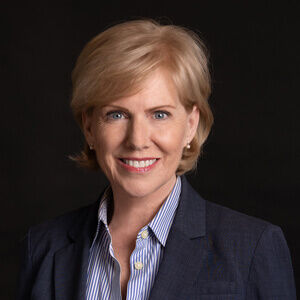
Mary D. Kane
President & CEO
Maryland Chamber of Commerce

Jay Steinmetz
Board Chair
Maryland Chamber Foundation

Whitney Harmel
Executive Vice President
Maryland Chamber of Commerce
Executive Director
Maryland Chamber Foundation

